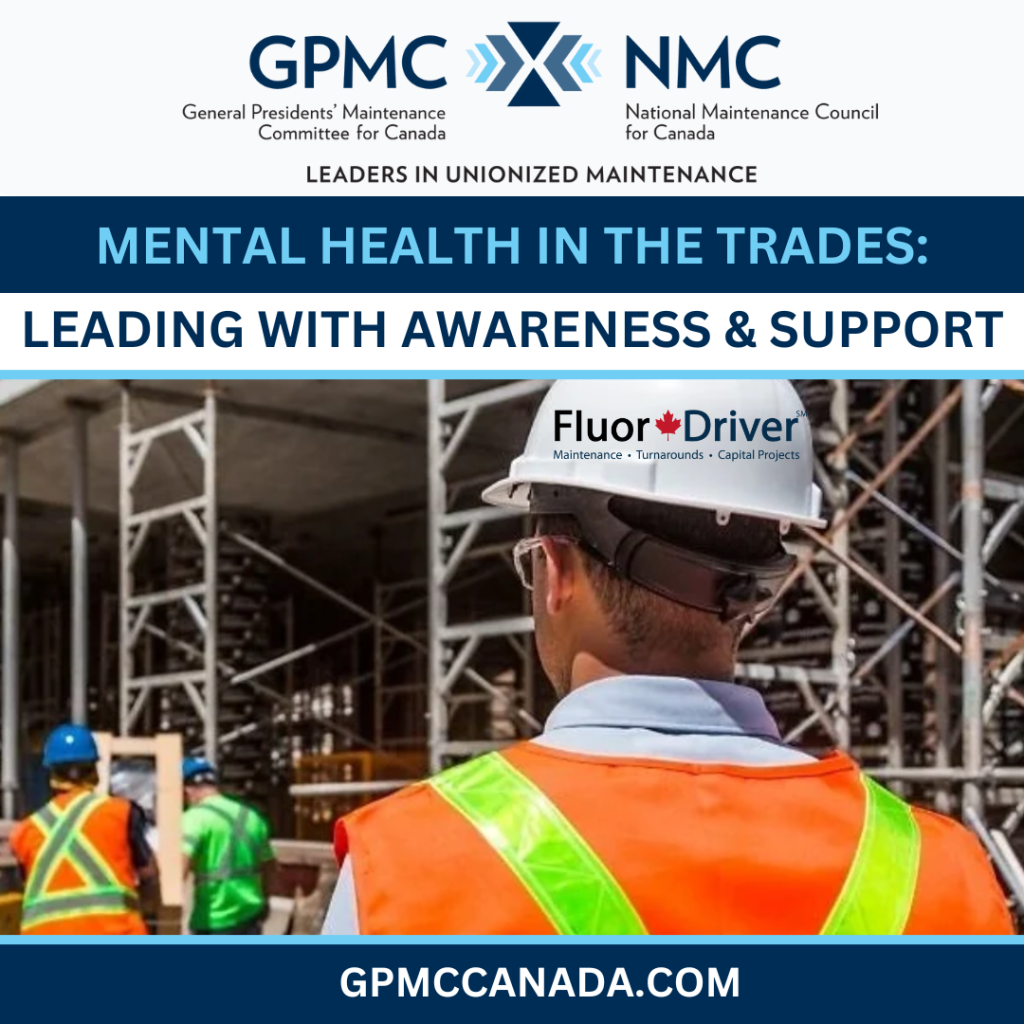
Mental health is no longer a hidden topic in the trade industry; it’s now a priority as companies and leaders recognize its vital role in employee well-being, productivity, and overall safety. For us as leaders, it’s essential not only to understand the mental health challenges our teams may encounter but also to create a positive and supportive environment. By prioritizing mental health and fostering an open culture, we can spot potential issues early and encourage team members to seek help without fear of stigma. Addressing mental health is more than a trend—it’s a necessary commitment to building a resilient, healthy workforce.
As leaders in the industry, we establish policies and procedures to keep our employees safe, ensuring that everyone returns home to their families at the end of each day. In physical safety, our responses are clear-cut when someone is physically injured, we provide immediate medical care. For instance, a cut might require stitches, while a sprained ankle could need a cast or a wrap. Once the physical injury heals, we follow a return-to-work process to help the individual transition back.
Addressing mental health presents unique challenges. Unlike physical injuries, mental health struggles are often invisible, making them harder to recognize without a clear “hazard” to spot. This is why meaningful engagement with our teams is essential for early identification. Instead of the typical “How was your weekend?” I ask questions like, “What was your favorite part of your weekend?” This small shift opens the door to deeper conversations and allows managers to identify potential signs of mental health challenges. By encouraging team members to reflect on positive experiences or share any difficulties, we foster a culture of trust and openness.
Additionally, we’re working with healthcare representatives to develop a mental health return-to-work process. This document will help us assess whether an employee is truly ready to return following a mental health leave, ensuring they’re in the right headspace to re-enter the workplace safely and effectively.
We are also partnering with our clients to organize training programs like “SafeTalk” for our frontline supervisors. These programs equip them with the knowledge to recognize early signs of mental health struggles and outline the appropriate steps to take if they notice concerning behaviors.
In conclusion, prioritizing mental health within the trade industry is not just a responsibility—it’s an imperative that shapes the future of our workforce. As we enhance our policies, engage in meaningful conversations, and implement training programs, we take significant steps toward creating a safer, more supportive environment for our employees. By recognizing the unique challenges of mental health and committing to proactive solutions, we foster a culture where individuals feel valued and understood. Together, we can ensure that every team member not only returns home safely at the end of the day but also feels supported and empowered in their mental well-being. It’s time for us as leaders to champion this crucial aspect of workplace culture and pave the way for a healthier, more resilient industry.
Author: Scott Johnston, Manager/Superintendent of Fluor Driver